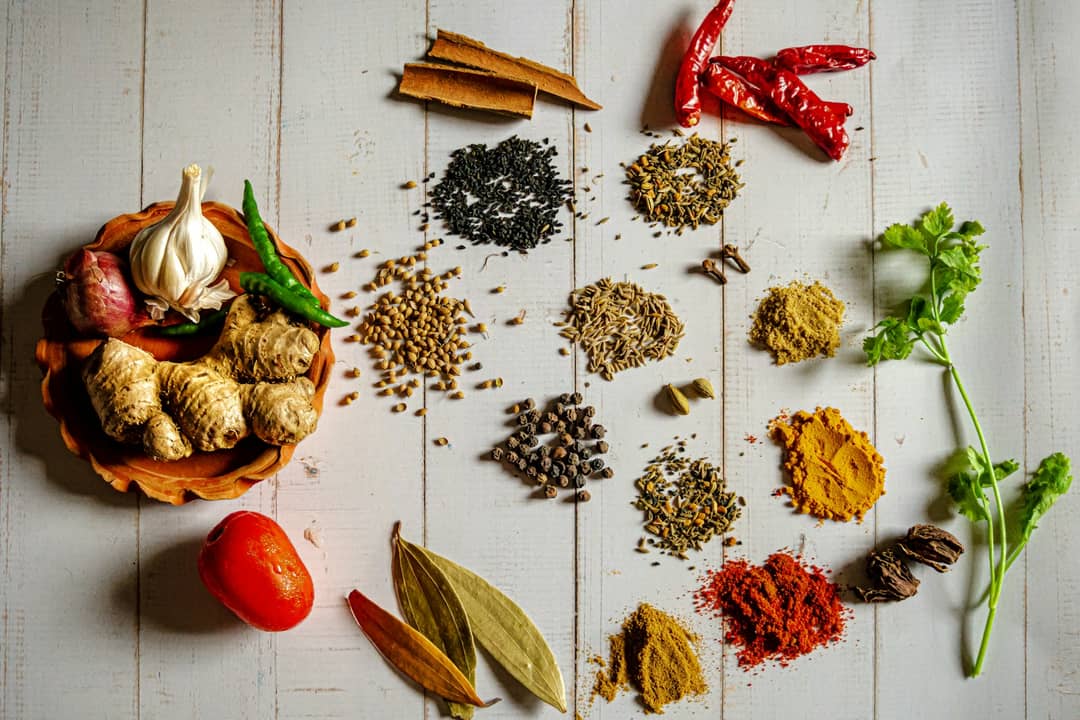
First-Person Writer POV: Traditional Brass Spices & Cardamom
Three days after my grandmother passed away in her ancestral home in Bangalore, I stood in my kitchen six thousand miles away, looking at her brass spice box—the masala dabba she had carried across the Atlantic in a battered suitcase twenty-five years ago.
The circular brass lid was tarnished with deep copper thumbprints where her hands had opened and closed it tens of thousands of times.
When I lifted the latch, the seal gave way with a soft, metallic sigh, and a miniature monsoon rose into the cold California air:
- Whole black mustard seeds (sasive), small as pinheads and hard as slate.
- Cumin seeds toasted in cast iron, smelling of dry savannah earth.
- Dried fenugreek leaves (kasoori methi), bitter and sweet like dark molasses.
- Whole green cardamom pods split down their seams to reveal their oily, black seeds.
My prefrontal cortex knew the clinical reality: my grandmother was eighty-two, her heart had quietly stopped on a Thursday dawn, and her body had already been committed to the flames on the banks of the Cauvery.
Yet the moment that cloud of roasted cumin and cardamom touched my olfactory receptors, my body refused to believe she was gone.
My heart rate jumped. My eyes flooded with involuntary tears. My shoulders dropped. In the ancient, primordial limbic circuits of my brain—the ones that do not speak English and do not understand death certificates—Ajji was standing right beside me at the gas stove, watching my hand with that quiet, piercing gaze that saw through every excuse I had ever made.
The Biology of Sensory Time Travel
Psychiatrists love to talk about grief as though it were a tidy five-stage staircase: Denial, Anger, Bargaining, Depression, Acceptance.
Anyone who has ever buried someone they loved knows that this model was invented by someone who had never grieved.
Grief is not a staircase. Grief is a sudden, unannounced spatial distortion.
You can spend six months feeling completely functional. You handle the probate logistics. You file the tax returns. You go to dinner parties, laugh at jokes, and buy groceries like an adult. You congratulate yourself on being emotionally resilient.
And then, on a random Tuesday in October, you reach into the pantry and crack open a cardamom pod between your thumb and forefinger.
The sudden burst of pine, camphor, and mint hits your nervous system like an electrical shock. Your knees literally buckle. You find yourself sitting on the kitchen tile, weeping into a dish towel, because the entire tactile universe of your childhood just collapsed into the palm of your hand.
The olfactory nerve is the only sensory pathway that bypasses the thalamus—the brain’s rational sorting station—and plugs directly into the amygdala and hippocampus. Smell does not ask for permission to remember. It kicks open the front door of your memory and drags you backward through time.
The Lesson of the Mustard Seed
When I was nine years old in Bangalore, my grandmother taught me how to make the oggarane—the tempering of spices in hot oil that forms the aromatic backbone of South Indian cooking.
I was impatient. I wanted to dump the mustard seeds into the lukewarm oil so I could run outside and play cricket with my cousins in the alley.
My grandmother snatched my wrist with surprising strength. Her grip was calloused and warm.
We waited. The mustard oil grew translucent, then shimmering, until a faint, delicate wisp of blue smoke rose from the center of the pan.
Only then did she drop the seeds.
For one breathless second, there was absolute silence.
And then the seeds erupted. A furious, crackling, joyful symphony of miniature explosions against the iron walls of the pan. The hard black shells burst open, releasing their nutty, pungent sulfur into the room, perfuming every corner of the house with life.
How We Preserve the Dead
We build marble monuments for kings and write Wikipedia articles for politicians. But we preserve the people we love through the humble, physical choreography our hands repeat in daily life:
- The specific flick of the wrist that scatters a pinch of coarse sea salt over hot lentils.
- The patience to let the mustard seeds crackle until the last one has surrendered its shell.
- The habit of leaving the kettle on the stove so there is always warm water for whoever walks through the front door.
My grandmother did not leave an estate or a corporate legacy. She left seven small brass cups of whole spices and sixty years of culinary muscle memory.
Every time I stand over the stove and drop mustard seeds into smoking ghee, the grief does not disappear. But it stops being an unbearable wound, and becomes what it was always meant to be: a living thread of connection across oceans, across time, across death itself.