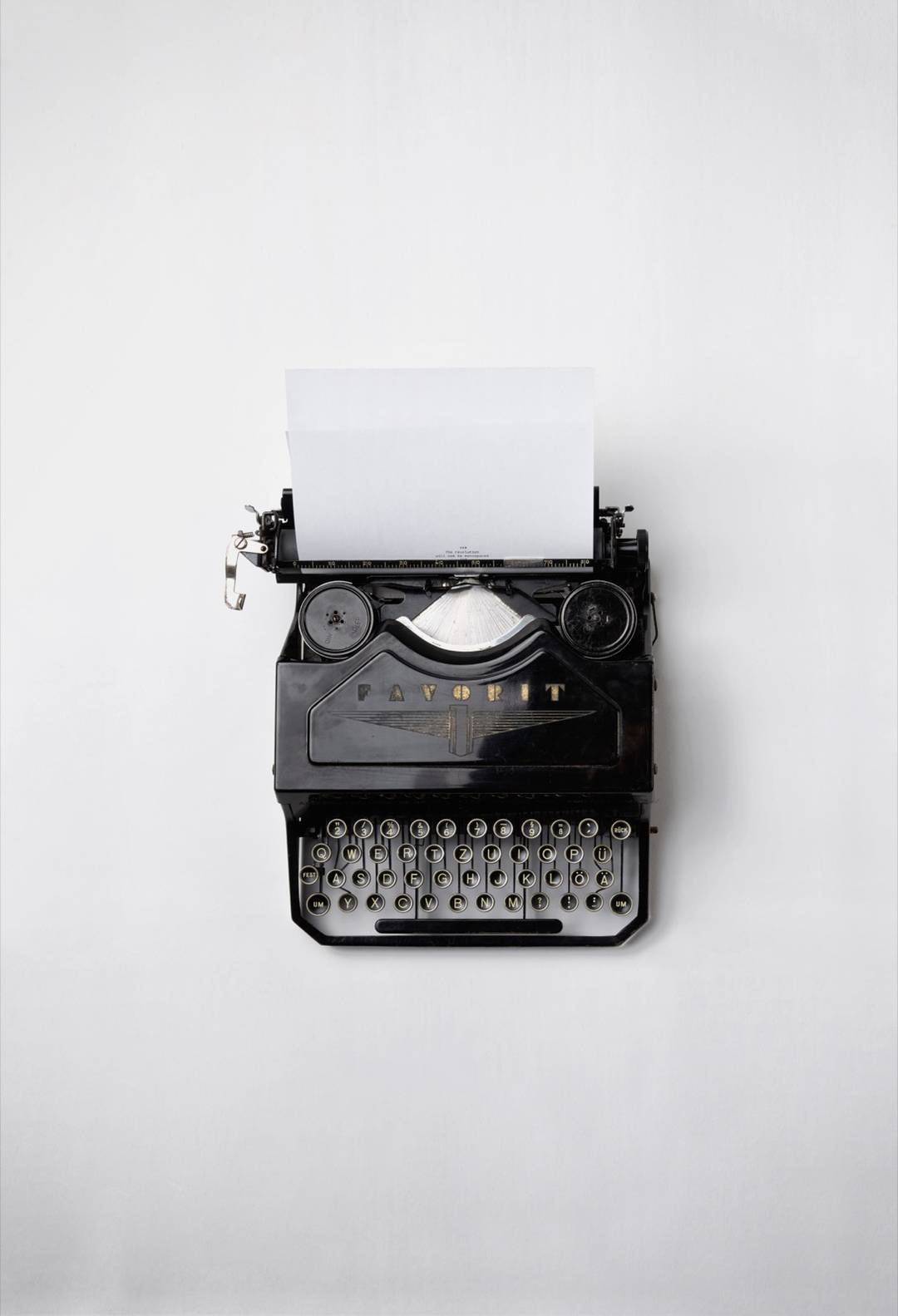
First-Person Novelist POV: Vintage Manual Typewriter & Paper
In the spring of 2021, like hundreds of other essayists and novelists, I moved a portion of my non-fiction writing onto one of the major venture-backed publishing platforms.
At first, the experience felt intoxicating.
You publish an essay on grief or the architecture of memory, and within forty-five seconds, an analytics dashboard begins to pulse with real-time green telemetry:
- “412 readers currently on page.”
- “28 claps per minute.”
- “Click-through rate: 14.8%.”
Every fifteen seconds, you refresh the screen. A little dopamine chime sounds in your prefrontal cortex. The numbers climb. You feel seen. You feel relevant. You feel like you are standing in the center of an enormous, buzzing public amphitheater where thousands of people are hanging on your every word.
It took me roughly eighteen months to realize that this green dashboard was not serving my art.
The Unconscious Infection
The danger of an algorithmic platform is not that it forces you to write bad prose at gunpoint. The danger is infinitely more subtle: it slowly alters the questions you ask yourself before you begin writing.
Before the platforms, when I sat down to write an essay, the question was simple and terrifying:
After eighteen months on the platform, I noticed that an algorithmic filter had quietly inserted itself between my heart and my pen:
- "If I spend three paragraphs describing the specific texture of monsoonal mildew on the walls of my childhood room, will readers bounce before the 30-second mark?"
- "Should I rephrase this delicate, uncertain thought into a sharp, provocative binary take that people will quote-tweet with outrage?"
- "Maybe I should turn this 3,000-word meditation on my father's silence into a tidy '5 Lessons on Emotional Healing' listicle so it performs better on mobile feeds?"
Without even realizing it, I had stopped writing for the human being sitting alone in a quiet room at midnight.
I was writing for the recommendation algorithm. I was flattening my own lived complexity into digestible, shareable, algorithmic fast food.
The Tyranny of the Metrics Dashboard
In his classic 1936 essay The Work of Art in the Age of Mechanical Reproduction, Walter Benjamin warned of what happens when art is severed from its "aura"—its unique existence in a particular place and time—and transformed into a mass-manufactured commodity.
A metrics dashboard is the ultimate industrial slaughterhouse for literary aura.
A great essay might only be read by seventy-two people. But for three of those seventy-two, it might be the exact sentence that saves them from a season of unbearable loneliness. It might make them weep in a crowded commuter train because someone finally articulated a grief they thought was theirs alone.
To an algorithmic platform, an essay read by seventy-two people is classified as a miserable failure. It gets buried by the feed, starved of distribution, and deemed "un-engaging."
The algorithm does not care about depth; it cares about velocity. It does not care about tears; it cares about clicks.
The Small Web and Sovereign Independence
Six months ago, I closed my account on the platform, exported my archives into plain Markdown files, and moved my writing to this quiet, independent corner of the internet.
The transition felt like stepping out of a deafening, neon-lit casino in Las Vegas into a sunlit botanical greenhouse after rain.
On an independent blog:
- There are no claps. There are no follower leaderboards. There is no leaderboard telling you that your peer just gained 5,000 subscribers while you were taking a walk.
- There are no ads blinking in the margins, trying to sell the reader mattress toppers or productivity software while they are reading about grief.
- The writing exists in its own space, at its own pace, for as long as it takes the reader to absorb it.
A Parting Toast to the Quiet Work
Joan Didion once wrote: "I write entirely to find out what I'm thinking, what I'm looking at, what I see and what it means."
Notice what she didn’t say. She didn’t say: "I write to optimize my funnel."
If you are a writer, an artist, or a thinker, do not surrender your voice to a landlord who charges you your dignity for rent.
Own your words. Own your domain. Write the long, slow, complicated sentences that make the algorithm scratch its head in confusion. The real readers—the ones who read with their hearts wide open—will find you in the quiet.